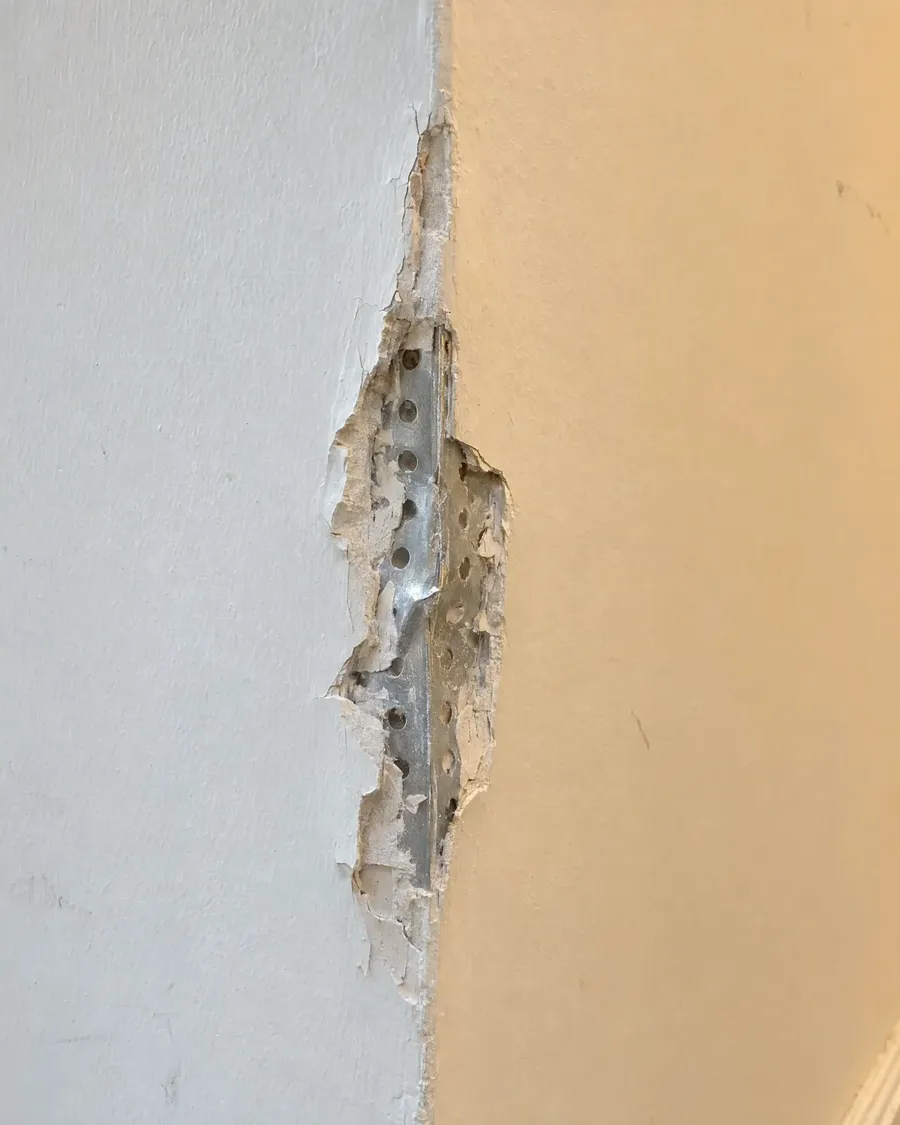
Drywall Repair in Morgan City, LA
Storm-soaked walls, ringed or sagging ceilings, AC closet leaks and holes, mended and given a texture that matches the surrounding surface, then primed for your paint.
Calling starts a short conversation about the damage, after which we line up an estimate from one of the town's drywall pros.
Call 7 days, 7am–9pm
Your note is passed to a Morgan City drywall pro, who will phone to go through the damage and settle on a figure with you.
01 After water reaches the wallboard
Morgan City sits on the banks of the Atchafalaya River near the point where it meets the Intracoastal Waterway, and the town has a long acquaintance with storm water. Hurricane Juan made landfall near the city in 1985 and flooded many parts of it. When water has found its way into a wall or ceiling, doing things in the right sequence counts for far more than haste.
- Deal with the source first. If plumbing is the culprit, turn off its shutoff valve or the house main, and have the roof, window or AC drain seen to before any board is replaced. New drywall over an active leak only gets wet again.
- Ceiling safety comes next. If the ceiling has bellied downward or is dripping, the opening move is the breaker: shut off whichever circuit powers the nearest ceiling light or fan. Only then usher everyone, pets as well as people, out of the room beneath.
- Dry the room. Keep the AC or a dehumidifier running, and prop open closet and cabinet doors. With Morgan City's humid subtropical climate, damp board left to itself dries more slowly than most people would guess.
- Measure the moisture. A proper repair begins with a moisture meter on the board and the framing behind it, taken some distance beyond where the stain appears to end.
- Choose what comes out. Anything that stayed wet, swelled, crumbled or smells stale comes out and is renewed, normally to a straight line just over the topmost damp reading. Panels that test dry and remain solid may only need sealing and refinishing.
If insurance may be involved, please call your insurer before any work starts. The page on replacing water-damaged drywall after a storm goes into the cut-and-replace work in more detail.
02 Gypsum, mud and surface texture
Houses from recent decades mostly use half-inch gypsum panels on their walls, and builders sometimes chose a heavier five-eighths panel overhead. Bathrooms often have moisture-resistant board, and the area behind tile is usually cement board rather than drywall at all. Knowing which one is in the wall decides what a patch is made from, because a repair should be the same thickness as the board around it or it will sit proud or sunken under paint.
Two kinds of compound do most of the work. Setting compound, often called hot mud, hardens by chemical reaction, shrinks very little and tends to be chosen for the first fill of a deep hole or a repair in a wet area. Premixed compound is easier to sand and is used for the finish coats, but it dries by evaporation, so in muggy weather a coat may need far longer to be ready for the one after it.
The last step is the one people notice: matching what is already there. Before texture goes on the patch, the area is brought flat and feathered wide, then the texture is rebuilt with the same method used originally and tried on a scrap first. Primer follows so the new compound takes paint the way the old wall does. The Wall repair tips section has more on finishes for rental owners.
- Smooth No texture at all. The hardest to blend, since every ridge shows under a raking light.
- Orange peel A fine sprayed spatter. Recreated with a hopper sprayer or canned texture, tried out on cardboard first.
- Knockdown Heavier splatter skimmed lightly with a broad blade as it firms up, leaving flattened islands.
- Popcorn The cottage-cheese ceiling finish. Repaired with acoustic texture from an aerosol or hopper; old texture is tested before scraping.
03 The repairs on offer here
Four kinds of job make up the work, listed in the order they tend to matter after a wet season. Each has a page of its own that covers causes, the proper sequence of work and sensible questions to raise.
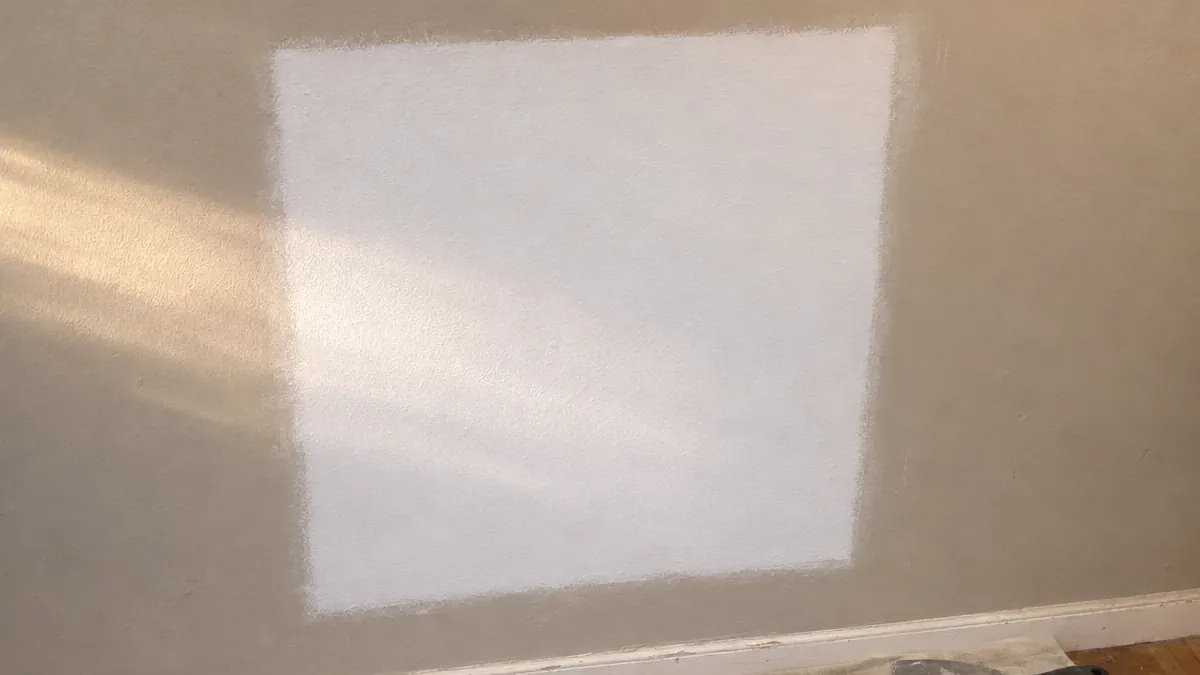
Water-damaged drywall
Walls that drank up storm water, opened beyond the damp zone and built back.
Storm-soaked walls in Morgan CityCeiling repair
Water rings, sagging board and cracked seams overhead, usually after a roof leak, sealed or replaced and refinished.
Stained and sagging ceilings in Morgan CityAC leak drywall repair
Closet walls and ceilings soaked by an overflowing condensate pan or a blocked drain line, dried and rebuilt.
AC closet water damage in Morgan CityHole patching
Doorknob punctures, anchor holes, popped nails, cracks and knocked-in corners, filled and evened out with the wall.
Holes, cracks and corners in Morgan City
04 Answers before you arrange anything
Will the repaired spot match the rest of the wall?
That is the aim of every step after the patch itself. The repair is feathered flat, the original texture is rebuilt with the same method and tested on a scrap, and primer evens out the new compound. Paint is then rolled from corner to corner on that wall, because touching up just the patch often leaves a visible change in sheen.
Will you arrange a repair for a single small hole?
Yes. A doorknob hole, a few nail pops or an anchor left from a television mount are all reasonable requests. If there are several small spots around the house, please mention them together so they can be priced and repaired as one job.
Will paint hide the patch completely?
Primer is what makes the difference. Bare compound soaks paint in unevenly compared with the surrounding wall and dries to a duller square, which painters call flashing. A sealed patch with a wide, gently tapered edge throws no shadow and is much harder to spot.
How many days should I set aside?
A minor patch using setting compound is often coated and completed in one sitting. Bigger repairs with ready-mixed compound tend to spread across two or three days, since every coat needs to harden fully before the following one, and muggy weather stretches that out.
Will sanding leave dust all over the house?
Sanded compound gives off a powdery dust that drifts from room to room. Worth discussing beforehand: a plastic curtain taped over the doorway, vacuum-assisted sanding, and, for a small repair, a damp sponge instead of sandpaper.
What happens once I have called or written?
We write down what happened and in which room, and may ask for a picture. After that, a parish-based drywall pro gets in touch by phone to discuss the damage and give an estimate. Nothing begins without your agreement to the price.
05 Plaster, early board and older paint
Morgan City was incorporated in 1860, so some houses here may well predate drywall. If your house was built before drywall became the usual material, its walls may be plaster troweled onto thin wooden lath. Plaster cracks along different lines from drywall, often in long runs or spider patterns, and the real concern is plaster whose grip on the lath has failed. Press gently near a crack: if the surface moves, the plaster needs to be reattached with plaster washers or screws before any filling, or the crack will simply return.
When a stretch of plaster cannot be saved, the loose material is taken back to solid edges and the gap is filled with gypsum board packed out with furring so that both surfaces finish flush, then skim-coated so the join fades under paint. Early drywall has its own habits, including seams that were taped with thin layers and nails that creep outward and raise small round blisters in the paint.
Older paint deserves caution. Homes built before 1978 may have lead-based paint somewhere under the newer coats, and sanding or cutting through it can release harmful dust. If your house is that old, please ask the pro, before any sanding, what containment and clean-up methods will be used. The EPA also lists textured paint and patching compounds on walls and ceilings among the places asbestos may be found in older homes, and advises having a trained professional take samples rather than sanding or scraping suspect material.
06 Overhead trouble: rings, sags and cracked seams
Tide marks overhead
A tide line overhead nearly always means water from above: a roof opening, a leaking bathroom fixture, or an AC unit in the attic overflowing its drain pan. Stopping that comes first. Once it has dried, a sealing primer goes over the mark (shellac and alkyd types are the usual picks), which holds it back far better than ceiling paint can on its own.
A ceiling that droops
A drooping panel has usually absorbed water or pulled free of its fasteners. When it is laden with water, flip the breaker for whatever lamp or ceiling fan hangs nearby as step one, and keep the floor below empty of people as step two. Soaked-through board is removed and renewed, while a dry panel that has merely slipped may be refastened with extra screws.
Cracks along the wall line
A crack in the angle between ceiling and partition wall may widen and close again as the roof trusses shift with the seasons. A rigid fill tends to crack again, so this joint is usually re-taped, or finished with a flexible bead, rather than just filled.
Bubbled or lifting tape
When paper tape comes unstuck it rises as a blister or a raised line on the joint, frequently following a damp spell. The detached strip is trimmed off, fresh tape is set in compound, and the joint is feathered broad enough to lie flat.
The page on ceiling repair after roof leaks covers popcorn texture and larger ceiling sections as well.
07 Reading damage back to its cause
Each kind of damage tends to point to a cause. The table below pairs the common signs with the usual reason and the page that explains the repair.
| What you see | Usual cause | Read more |
|---|---|---|
| Board gone soft and puffy at baseboard height after a storm | Floodwater that stood in the room or climbed the board from below | Storm-soaked walls |
| A tan tide mark or a yellowed patch on the ceiling | Rain through the roof, or a bathroom or AC unit overhead | Stained and sagging ceilings |
| Wet board in or next to the AC closet | Condensate drain blocked with sludge, so the pan spills over | AC closet water damage |
| A line of little round lumps under the paint | Fasteners easing out as the studs dry and shift | Nail pops and small patches |
| A slanting crack leading off a door or window corner | Ordinary flexing of the frame around that opening | Crack and hole repair |
| A corner edge dented in or split open | An impact that folded the metal bead beneath | Corner bead repairs |
| Blistered or raised tape along a joint | Tape that came unstuck, often after a damp spell | Seam and tape repairs overhead |
08 How size changes the work and the price
Small
Nail pops, anchor holes, hairline cracks and holes up to about three or four inches. Usually filled, or bridged with peel-and-stick mesh, then given two coats and sanded. As a rough yardstick, This Old House's pricing article lists $60 to $200 for a professionally patched small hole and $60 to $330 for a crack, as nationwide figures.
Medium
Doorknob holes, a torn outside corner, a cut-out left by a plumber. A piece of board is fitted with backing behind it, then taped and given three coats with drying time between. That article puts larger holes at $100 or more, with square-foot rates of about $50 to $80 commonly quoted.
Large
A ceiling section or the lower part of a wall removed after water damage. Fresh sheets go up on the studs or joists, each seam gets tape and compound, and texture and primer complete it. This Old House cites $320 to $1,300 nationally for ceiling hole repairs, scaling with the extent of the damage.
Please treat those as nationwide reference points, not quotes for Morgan City homes; the figure that matters is the estimate you receive. The biggest influences on it are working height, any texture to reproduce, how much wall or ceiling must be repainted for an even sheen, how many return trips the drying calls for, and whether the leak or other cause is still waiting to be dealt with.
09 The river town and its six neighbors
We book repairs throughout Morgan City and in neighboring St. Mary Parish communities, and also in Gibson, just across the parish line in Terrebonne.
- Berwick lies just west of Morgan City and shares the same river frontage.
- Bayou Vista and Patterson continue to the west, a few miles further out.
- Siracusaville borders the city on its eastern side, and Amelia sits about eight miles east.
- Gibson lies further east on LA Highway 182, on the way toward Houma.
Each of these places has its own short write-up on the Morgan City service area page.
10 What a repair day involves, step by step
Plain expectations help a repair go smoothly. These are the stages a sound drywall repair moves through once you have accepted an estimate and we have confirmed a convenient start date with you.
- Protecting the room Furniture is pulled away from the work area, the flooring is draped, and plastic can be hung across doorways if sanding is planned.
- Opening up Spoiled board comes away until only solid, dry edges remain, and the studs or joists are looked over before anything is covered again.
- New board and tape A patch or a full new sheet is fixed to the studs, joists or added blocking, and every edge receives tape.
- Coats and drying Compound goes on in two or three layers, every layer reaching further out than the one beneath it, with a pause for hardening in between.
- Texture and primer The surface finish is recreated to match, then the repair is sealed with primer and awaits paint.
- Tidying up Dust is vacuumed, scraps are bagged and the plastic comes down.
Please ask the pro which stages fall on which day, and whether painting is part of the estimate or left to you.
11 Mending what wiring, plumbing and duct work leave behind
Electricians fishing new wire, plumbers reaching a shower valve, HVAC installers moving a return or register, and installers running data or camera cable all leave openings behind. Those holes are rarely square, and they often fall between studs where there is nothing to screw a patch to.
A neat closure begins by trimming the hole square, then fixing wood cleats or furring strips behind its edges to give the insert a firm landing. The insert is screwed flush, taped all round, coated and textured like any other mend. If a valve or junction box must stay reachable, a removable access panel is a better choice than a permanent patch.
Please allow the other trade to complete and test its work first. Cutting into a fresh patch to reach a weeping fitting costs more than a day's wait. Openings of this size are explained further under patching holes and broken corners.
12 Arrange your estimate
Dial the header number during calling hours, message us a snapshot of the damage, or complete the estimate form. We will confirm the details and line up the estimate with a drywall pro whose territory includes Morgan City and nearby towns.
Calling starts a short conversation about the damage, after which we line up an estimate from one of the town's drywall pros.